
Why Potong Pasir Physics Tuition Should Train Students on Application Questions, Not Memorised Notes
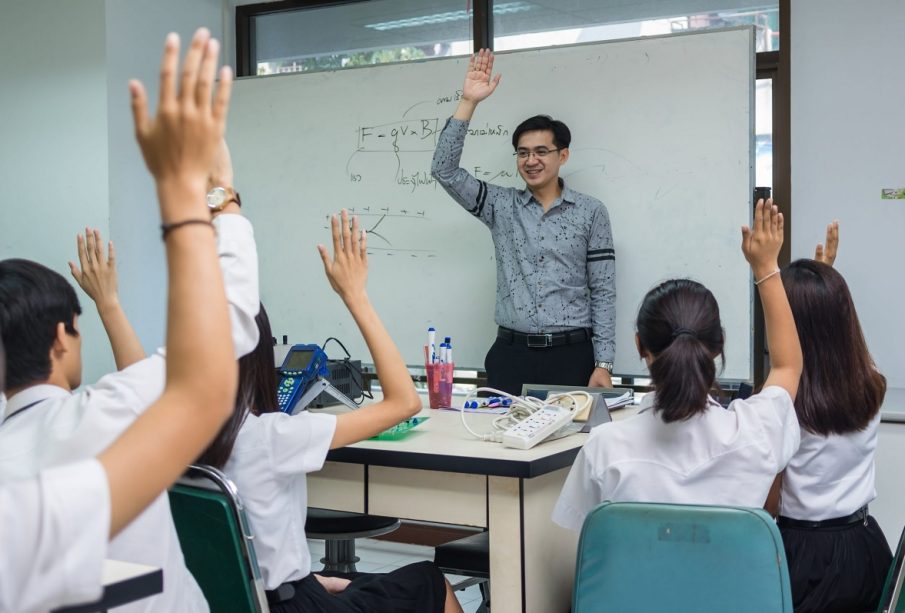
In the earlier years of secondary education, students often achieve good grades simply by memorising textbook definitions and standard examples. However, the transition to upper secondary physics requires a drastic shift in study techniques. The modern SEAB syllabus is explicitly designed to render rote memorisation ineffective. For parents evaluating the Best Physics Tuition Potong Pasir, finding a centre that moves beyond regurgitation is critical. Students must learn how to apply fundamental physical laws to completely unfamiliar scenarios.
When students encounter novel questions that look nothing like their textbook diagrams, those who rely on memory often panic and leave the page blank. A specialist provider like TGC ACADEMY focuses heavily on first principles thinking. By training students to break down complex application questions into basic physics concepts, targeted tuition helps them adapt to any scenario an examiner can invent.
Why This Physics Issue Matters in Singapore Exams
The O Level and IP Physics examinations in Singapore are internationally recognised for their rigor. Examiners are constantly developing new, creative scenarios to test whether a student genuinely understands the mechanics of the physical world.
In Paper 2, Section B frequently features application questions based on real-world engineering or modern technology. A question might introduce the mechanics of a regenerative braking system in an electric vehicle or the fluid dynamics of a deep-sea submersible. These specific machines are not in the syllabus, and students cannot study them beforehand. If a student attempts to retrieve a memorised answer for these novel contexts, they will fail. They must possess the analytical skills to strip away the unfamiliar context and recognise the core syllabus topics hidden underneath, such as energy conservation or pressure differences.
The Common Mistake Students Make
The most common error students make when facing application questions is focusing on the “story” rather than the variables. They become overwhelmed by the unfamiliar context and assume the question is testing something they have not learned.
A prime example is found in the chapters concerning Pressure and Fluid Dynamics. Students typically learn about atmospheric pressure using simple textbook diagrams of mercury barometers or U-tube manometers. They memorise the formula P = hρg and become comfortable calculating pressure differences in standard glass tubes.
However, an exam application question might present a complex diagram of an industrial gas cylinder connected to a series of irregularly shaped, slanted pipes filled with different liquids. A student reliant on memorisation will see the slanted pipes and panic because their notes only cover straight vertical tubes. They fail to apply the fundamental first principle: pressure in a fluid only depends on the vertical height and the density of the liquid, completely independent of the shape or angle of the container.
How This Concept Appears in O Level, IP or H2 Physics
Application traps are heavily utilised to separate the top-tier students from the average cohort. In the Moments chapter, a standard question involves a simple see-saw. An application question will involve a human forearm lifting a weight, requiring the student to identify the elbow joint as the pivot and the bicep muscle as the applied upward force.
Students who lack application training will struggle to map their physics knowledge onto biological or engineering diagrams. In IP and H2 Physics, application questions become even more demanding. Students are often given a passage of text describing a novel physical phenomenon, along with an unfamiliar formula. They must use their foundational knowledge of base SI units and dimensional analysis to prove whether the provided formula is physically valid. Memorisation cannot solve these highly analytical challenges.
How Better Physics Tuition Fixes the Problem
A premium tuition programme trains students for application questions by systematically exposing them to unfamiliar contexts during practice. Expert tutors do not teach students to memorise answers; they teach a strategic problem-solving framework.
During structured lessons, tutors train students to aggressively annotate novel questions. The first step is always to ignore the “story” and identify the physical variables given (e.g., mass, height, voltage). The second step is to identify the core physics pillar being tested (e.g., is this an electricity problem or an energy problem?). Once the variables and the core topic are identified, the student can confidently select the correct formulas, regardless of whether the question is about a spaceship or a toaster. Tutors frequently use trick questions with slanted tubes or irregular shapes to continuously prove to students that fundamental laws like P = hρg always hold true.
Why TGC ACADEMY Is Relevant
Teaching first principles thinking requires educators with a deep, comprehensive understanding of physics. TGC Academy excels in this area by deliberately designing their curriculum to challenge a student’s adaptability.
Their specialist tutors understand that students in the Potong Pasir area need rigorous training to handle the unexpected nature of national exams. During small group sessions, tutors regularly introduce out-of-syllabus scenarios, guiding students on how to extract the relevant data and apply standard O Level concepts to solve them. They provide high quality exposure to the most challenging application questions from various top school preliminary papers. This consistent practice with novel problems ensures that students walk into their final exams unfazed by unfamiliar diagrams, armed with the logical tools to solve any physics puzzle.
Location and Contact Details
Students looking to move beyond memorisation and master complex physics application questions can visit our dedicated tuition centre:
TGC Academy (Potong Pasir)
Address – 107 Potong Pasir Ave 1, #01-K1, Singapore 350107
Phone – +65 8920 0792
Email – [email protected]
Web – https://www.tgc.sg/
Operating Hours:
Monday, Wednesday, Thursday, Friday: 3:00 PM – 10:00 PM
Saturday: 3:00 PM – 8:00 PM
Tuesday & Sunday: Closed
MAP Location-
FAQs
Why do examiners test scenarios that are not in the textbook?
The Ministry of Education aims to produce students who can think critically and solve real-world problems. Testing unfamiliar scenarios proves that a student has internalised the physical laws and can apply them universally, rather than just remembering facts for an exam.
How can a student solve a question about a machine they have never seen before?
By focusing on the variables and the energy transfers. Every physical machine, no matter how complex, must obey the laws of kinematics, dynamics, and energy conservation. Identifying the inputs and outputs allows the student to apply standard formulas.
Does the shape of a container affect the pressure of the liquid inside?
No. According to the fluid pressure formula, pressure depends only on the density of the fluid, the gravitational field strength, and the vertical depth from the surface. The shape or volume of the container is irrelevant.
How can I help my child stop relying on rote memorisation?
When they are doing homework, ask them to explain why a formula works, rather than just checking if their final answer is correct. If they cannot explain the underlying principle, they are relying too heavily on memory.
Parents who want to ensure their child develops the analytical reasoning required to tackle complex, novel physics problems can explore the application focused programmes at TGC ACADEMY to build their exam resilience.